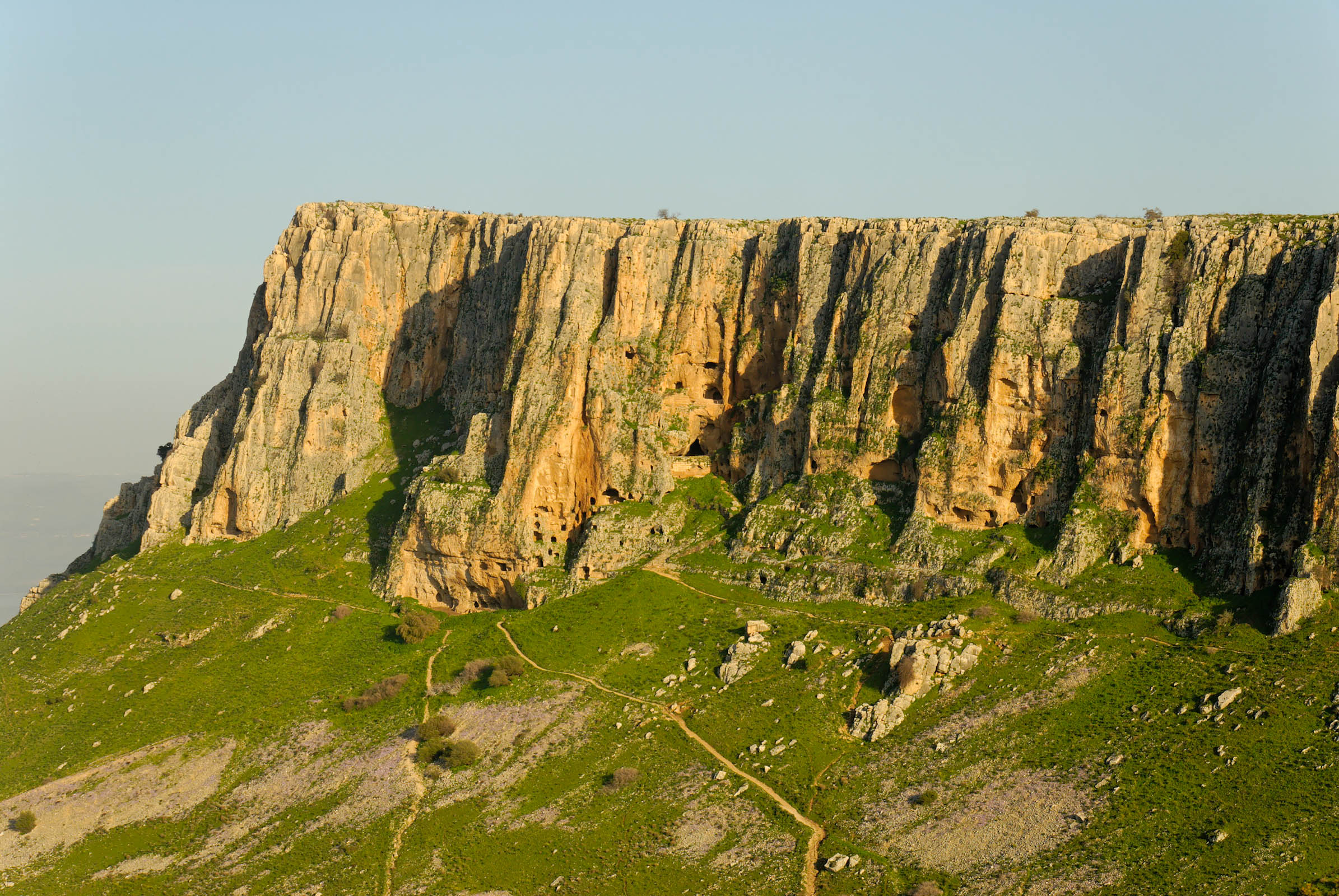
Arbel cliffs from northwest, © bibleplaces.com, used by permission.
BLESSED ARE THE POOR IN SPIRIT
“Blessed are the poor in spirit, for theirs is the kingdom of heaven.”
Matthew 5:3
Jesus begins His great sermon on the mount speaking not about righteousness, mercy, purity, or peacemaking, but about poverty. Not poverty of money, but of spirit. In modern times, being poor in spirit is a very foreign and uncomfortable idea. Our entire western ethic is based upon our own gumption and ability to make something of ourselves, and dependence upon another for anything is generally looked down upon. But when our comforts and resources are removed, we may find ourselves lacking in that gumption and ability, especially when those comforts and resources were never ours to begin with.
To be poor in spirit is not weakness or shame; it means honestly recognizing our deep need for God. It is spiritual humility - empty hands open to receive grace rather than hearts filled with self-reliance. When we strip away all our illusions of self-sufficiency and recognize that we are nothing without God, we begin to approach being poor in spirit. It is when we stop pretending that we are spiritually strong and instead come to God as we are – needy and flawed – that we learn just how completely we are loved. The “poor in spirit” are those who:
-
Acknowledge their dependence on God.
-
Do not rely on their own righteousness.
-
Approach God with humility rather than entitlement.
-
Know that grace is a gift, not a reward, or even something we can earn.
Spiritual poverty is honesty about our need for God. Instead of pretending strength, we confess our need and speak honestly before God. God is not impressed by strength or ability or performance, but by a humble heart and honesty before Him. True blessing begins when our words match our spiritual reality. It is uncomfortable and awkward. However, we are all in the position of needing God for our daily provision as well as our eternal provision, whether we admit it or not. Being poor in spirit means saying, "Lord, I cannot save myself. I need Your mercy. Everything I have is from You."
Humility is not humiliation; it is truth. Humility frees us from defending our image. Our weakness is not a barrier to grace – it is an opening. When our worth rests in God's love, criticism or praise loses power over us. And spiritual poverty admits, "I don't know everything." We approach Scripture, people, and God with curiosity rather than certainty.
Being poor in spirit does not mean doing nothing; it means offering our best while trusting God for what we cannot control. Here is the paradox: those who admit they have nothing receive everything. “Theirs is the kingdom of heaven.” Not “will be,” but is. The kingdom belongs to those who know they cannot earn it.
Lord Jesus, God of grace,
We come to You empty-handed. We confess that we try to live as though we do not need You. We rely on our strength, our plans, and our goodness. And when these fail us, we remain empty-handed. Have mercy on us.
Teach us the blessing of humility. Strip away our pride and self-sufficiency. Teach us the freedom of empty hands. Help us to see our needs without fear, and to trust that Your mercy is greater than our weakness. Make our hearts humble and our words honest and gentle. Help us to rest in Your grace. Let Your kingdom take root within us. Teach us to depend on You alone, that our emptiness may be filled with Your kingdom life.
Amen.
Today, choose one area where you normally rely on yourself – decision-making, productivity, problem-solving – and consciously invite God into it. Before each task, pause for 10 seconds and pray: “Lord, I need You.” End the day by thanking God for every good thing that happened, naming each as a gift given by God, rather than an achievement of your own.
This simple practice forms our hearts in spiritual poverty: not despair, but trust. For when we know we are poor, we finally become rich in grace. Let dependence on God become your strength. Jesus promises that the kingdom belongs not to the self-sufficient, but to those who come empty enough to receive it.

-
Location